
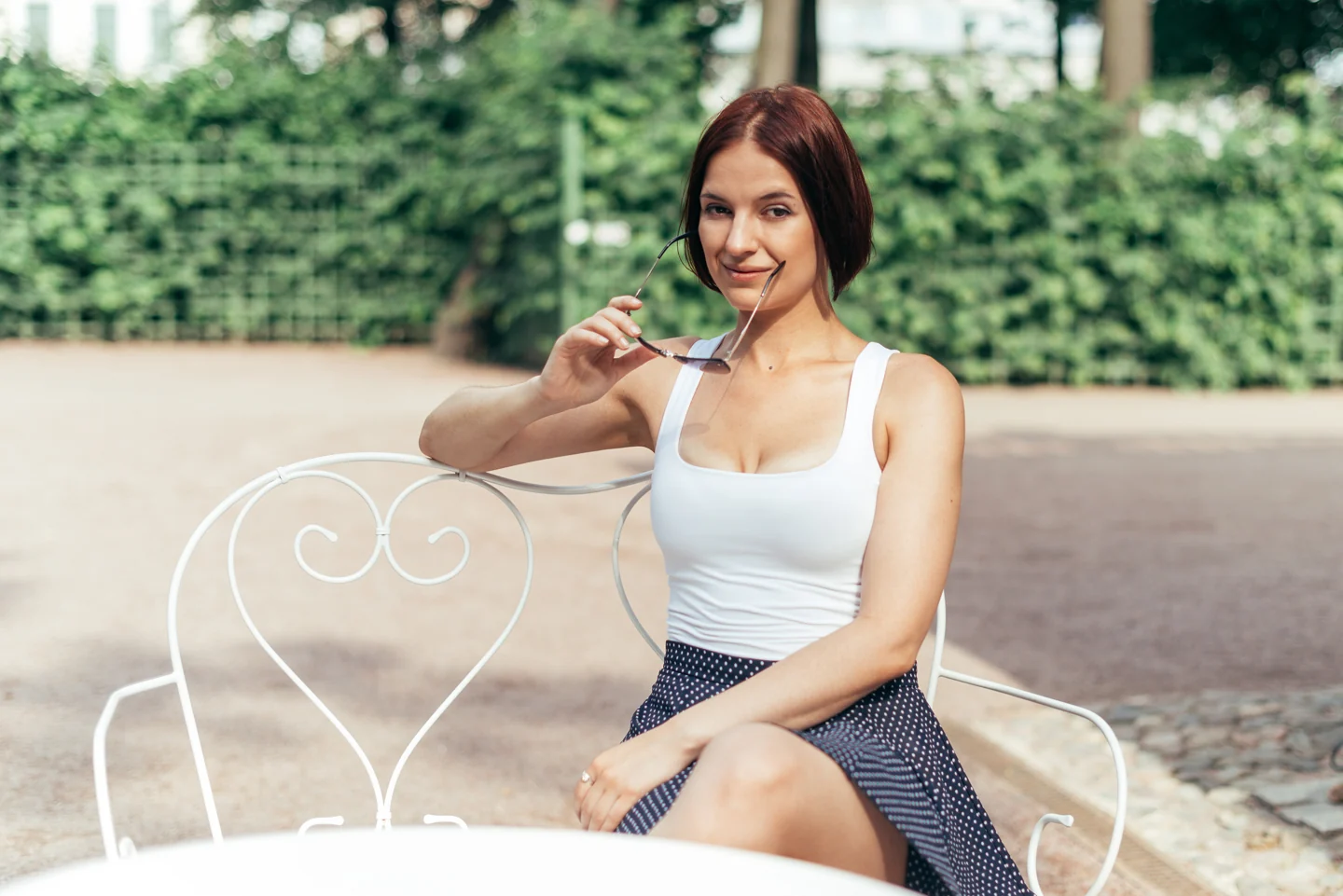
Let the First Portrait Do One Job Well
Your first image should make it easy to see your face. Choose natural light, a relaxed expression, and a background that does not compete for attention. You do not need a formal photo session, an expensive outfit, or a dramatic location to make a welcoming impression.
A photograph taken by a friend can feel more relaxed than one captured while you are trying to hold the camera and pose. Stand near soft daylight and try a few angles without changing your appearance through filters. Check the final image at phone size. If your face becomes a tiny detail or disappears into shadow, it is probably better as a supporting photo than as the first portrait.
Build a Small Gallery With Different Roles
Think of each image as adding one piece of information. Repetition uses space without helping someone understand you. Five portraits from the same evening may look consistent, but a smaller set with different settings often gives a richer impression.
| Photo Role | What It Can Show | What to Avoid |
|---|---|---|
| Opening portrait | Your face and a relaxed expression | Sunglasses, deep shadow, heavy retouching |
| Everyday full-length image | Your current appearance and personal style | Distorting angles or an image from years ago |
| Real interest | An activity you genuinely enjoy | Borrowed equipment used only as a prop |
| A different setting | Another side of your week | Repeating the same pose and outfit |
| Optional occasion | A celebration or dressed-up moment | Making every photo look like a formal event |
You do not need to fill every available slot. A few accurate photographs are more useful than extra images that introduce confusion. Your gallery should help someone recognize you at a meeting, not create a character you have to perform afterward.
Keep Professional Polish With a Personal Touch
A well-made headshot can be useful, especially if it is recent and approachable. But a dating profile benefits from showing something beyond your professional role. Pair a formal image with a more relaxed scene so the overall impression feels personal.
An expensive backdrop, a borrowed luxury item, or a work event does not prove financial success or relationship readiness. Avoid relying on status symbols to communicate your value. If you enjoy dressing elegantly, show that naturally. If your happiest weekends are casual, include that too. Your written introduction and pictures should describe the same life, including the quieter parts someone might actually share with you.
Take New Photos Without Turning It Into a Production
Set aside a short period with a friend in a place where photography is allowed. Choose two familiar outfits and two simple settings: perhaps a bright indoor area and a public outdoor space. Keep the focus on comfortable expression rather than elaborate poses.
Ask your friend to take several frames while you move or talk, then review them together. Notice whether your eyes are visible, the focus is sharp, and the background reveals anything private. A photograph that makes you laugh may show more personality than the technically perfect frame. Save original files before making modest adjustments so you can return to them if an edit looks unnatural. You can update your gallery gradually instead of delaying your profile until you have an entire new collection.
Edit Light and Framing, Not Identity
Cropping a distracting edge or adjusting an overly dark image can make a photo easier to read. Changing facial structure, body proportions, age, or skin texture creates a different problem: the image may no longer represent the person someone will meet.
Apply the same honesty to AI tools. A generated portrait may look convincing but is not a recent photograph of you. Do not use it as identity evidence or as a substitute for an accurate dating photo. The lifestyle images on this informational site illustrate dating situations; that is a different purpose from a member profile representing a real individual. When in doubt, keep the natural version and choose a better source photograph rather than intensifying an edit.
Protect People and Details in the Background
Check for name badges, workplace signs, vehicle plates, house numbers, documents, and screens. A small detail that seems harmless at first glance can disclose more when an image is enlarged. Remove the image or crop it safely if it contains information you would not otherwise share with a new match.
Other people deserve a choice about appearing in your profile. Prefer photographs centered on you, and do not publish children's images as dating-profile decoration. A group photo can also make it unclear who the profile belongs to. If you use one later in the gallery, make sure every visible adult has agreed and that your identity is unambiguous. Our privacy guidance explains how profile visibility differs from control over what another person may remember or capture.
Match the Gallery to Your Present Life
Use photographs that still represent your appearance. A major haircut, change in facial hair, or other noticeable change is a good reason to update the opening portrait. Older travel images can be meaningful memories, but they should not create the impression that they show you today.
You also do not need to imply an activity is your weekly routine because you tried it once. A single diving holiday can be a good conversation topic without making you a dedicated diver. Describe the experience accurately if a caption is available. A truthful small story is easier to discuss than an aspirational persona, and it gives the other person a fair basis for deciding whether your interests overlap.
Check the Crop Before You Finish
Apps and websites can display the same upload in different shapes. Review the actual profile preview rather than assuming the original photograph guarantees a good result. Make sure your full face remains visible, the crop does not remove another person's face awkwardly, and an important detail has not moved outside the frame.
Leave some space around your head and shoulders when choosing a source image. That makes it more adaptable to a square thumbnail or narrow phone screen. If a crop is unhelpful, reposition it using the controls available or choose another photograph. The registration preparation guide also covers keeping suitable image files ready before creating your profile.
Use a Friend's Feedback for Recognition, Not Ranking
Ask a trusted person, “Which of these feels most like me?” and “Would you recognize me from this picture?” Those questions produce more useful feedback than asking them to rank your attractiveness. The goal is an inviting, accurate introduction, not a competition with other profiles.
If you disagree with their choice, ask what they noticed. They might prefer a warmer expression, a less distracting background, or a photograph where you look comfortable. You remain the person deciding what to share. Do not let a photo review become pressure to reveal more of your body, private life, or personal circumstances than you want to publish.
Once your gallery looks consistent and current, stop polishing for a while. Give the words and conversations equal attention. The first-message examples show how a specific interest can become an opening; your photographs can provide those details without needing to tell your entire story. A profile is a beginning, and the fuller impression develops when two people talk.